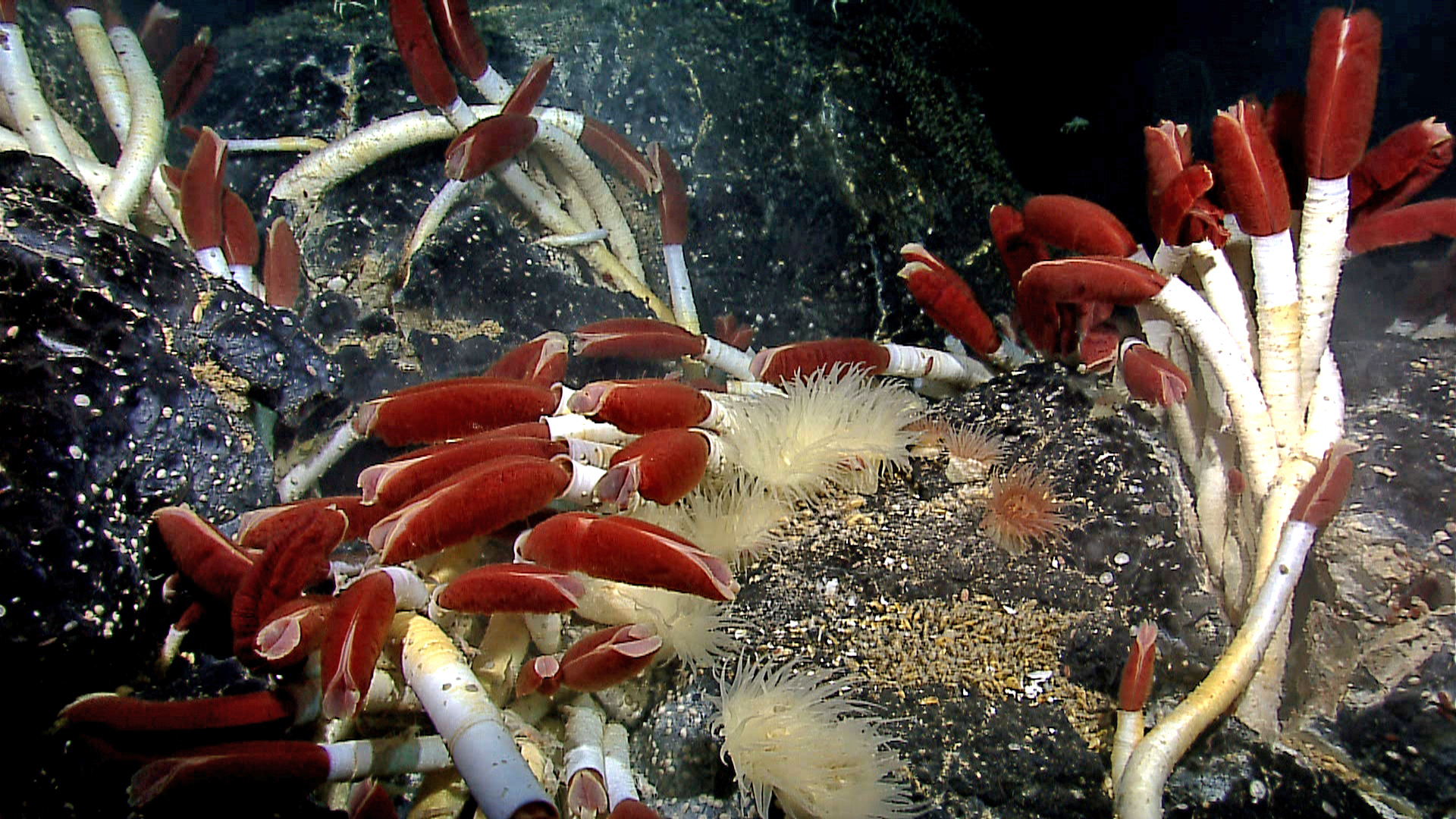
Riftia pachyptila, commonly known as giant tube worms, are among the most remarkable creatures living in the deep sea. These organisms inhabit hydrothermal vent ecosystems along the Pacific Ocean’s mid-ocean ridges, where sunlight never reaches and conditions would be lethal to most life forms.
Unique Physiology:
Unlike most animals, Riftia pachyptila have no mouth, stomach, or digestive tract. Instead, they rely on a specialized internal organ called the trophosome, which houses chemosynthetic bacteria. These bacteria convert toxic chemicals from hydrothermal vents—such as hydrogen sulfide—into energy, allowing Riftia to thrive in complete darkness.
Extreme Adaptations:
Giant tube worms can grow over 2 meters in length and survive temperatures that vary from near freezing to over 30°C within meters. Their bright red plumes contain hemoglobin capable of binding both oxygen and hydrogen sulfide, a rare adaptation essential for life in vent habitats.
Vent Ecosystems:
Riftia play a crucial role in hydrothermal vent communities, providing habitat for other organisms and supporting a complex food web based on chemosynthesis rather than sunlight. Their presence represents one of the best-known examples of life thriving in extreme environments.
Studying these tube worms helps scientists understand how life can survive without sunlight, offering clues about potential life on other planets and moons.